
Artificial Intelligence In Agriculture
Role Of Ai Deep Learning In Agriculture
Introduction: Artificial Intelligence in Agriculture
Artificial Intelligence in Agriculture, shifting traditional farming into a data-driven, technology-enabled ecosystem. AI-based machines, smart equipment, and intelligent software systems have elevated agricultural productivity, accuracy, and sustainability.
In recent years, Deep Learning (DL) — including algorithms such as Convolutional Neural Networks (CNNs), Recurrent Neural Networks (RNNs), and Generative Adversarial Networks (GANs) — has gained significant traction in agriculture. These techniques enable machines to learn patterns from data without explicit programming.
At AI India Innovations, we view AI in agriculture not as automation alone, but as an intelligent decision-support system that empowers farmers, researchers, and agribusinesses to optimize resources, improve yield quality, and reduce environmental impact.
Why Deep Learning Matters in Modern Agriculture?
Deep Learning plays a critical role in automating complex agricultural tasks while minimizing human error and inefficiency. Unlike traditional rule-based systems, DL models learn from data, adapt over time, and improve accuracy with experience.
While deep learning can be excessive for simple problems due to its data requirements, it excels in:
- Image processing
- Pattern recognition
- Large-scale data analysis
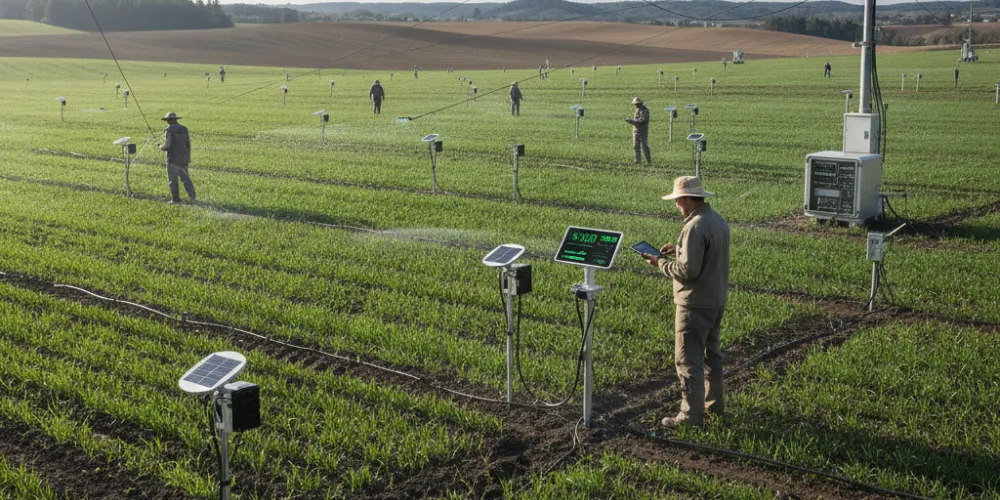
Farmers today analyze data from:
- Field sensors
- Agricultural machinery
- Satellite and drone imagery
This enables more efficient use of:
- Water
- Soil nutrients
- Fertilizers
- Fuel
- Crop protection products
Applications of Deep Learning Across Industries
Before entering agriculture, deep learning proved its value in several industries:
- Self-driving vehicles
- Natural language processing
- Virtual assistants
- Fraud detection
- Healthcare diagnostics
- Visual recognition systems
Today, these same capabilities are reshaping modern agriculture, and in the next 5–10 years, AI-driven farming is expected to become a global standard.
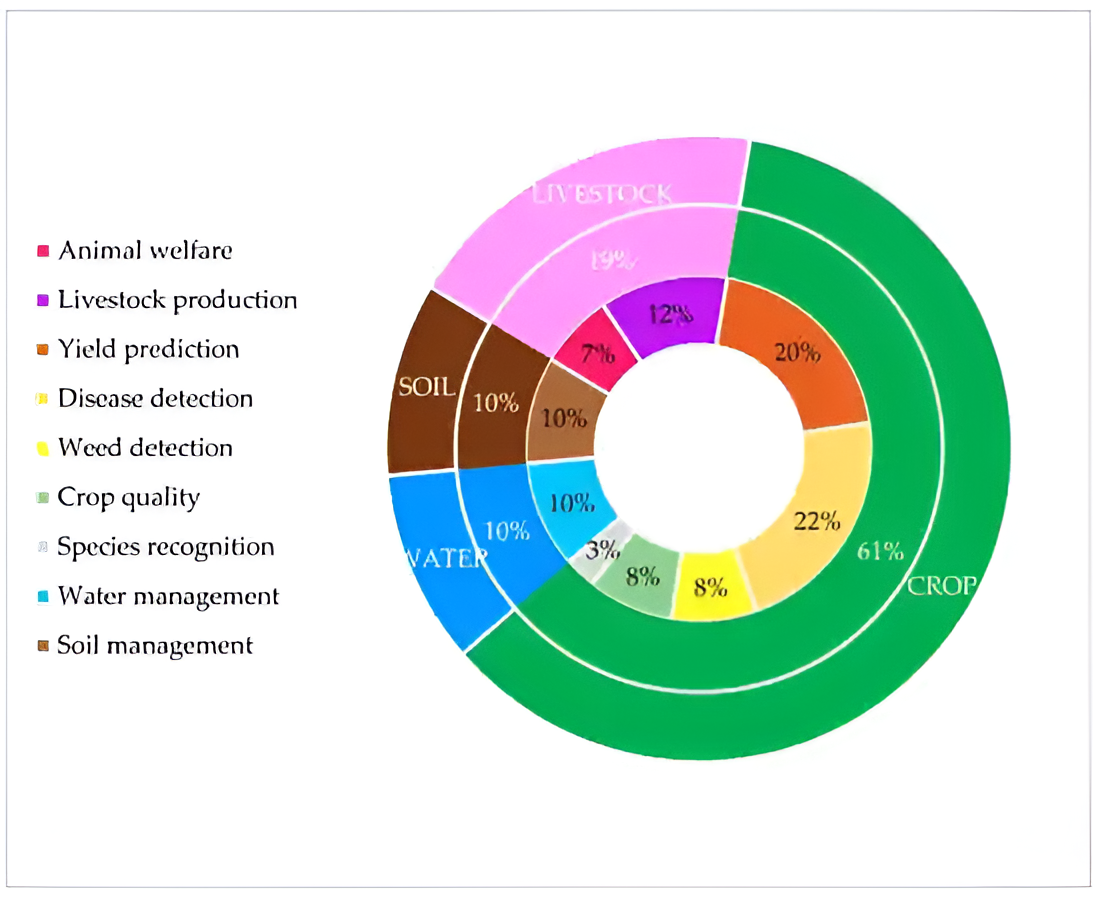
AI in Modern Agriculture: Key Use Cases
🌾 Agricultural Robotics
AI-powered robots automate repetitive and labor-intensive tasks such as:
- Harvesting and picking
- Weed control
- Crop monitoring
These robots operate faster and with higher consistency than manual labour.
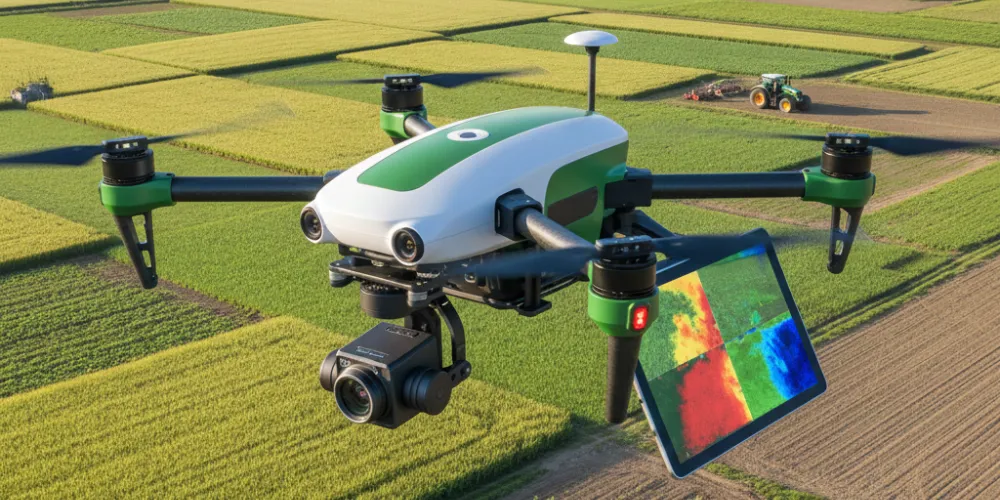
🚁 Crop Health Monitoring Using Drones
AI-enabled drones capture high-resolution field imagery. Deep learning models analyze this data to detect:
- Crop stress
- Disease spread
- Nutrient deficiencies
Example: SkySquirrel Technologies uses drone-based imaging to help farmers monitor crop health with precision.
🌦 Weather Forecasting & Crop Planning
AI-driven weather forecasting helps farmers:
- Determine optimal sowing times
- Select suitable crops
- Anticipate climate risks
This reduces uncertainty caused by climate change and environmental pollution.
🌱 Soil & Crop Health Monitoring
Soil quality directly impacts crop yield and quality. AI systems analyze soil composition and nutrient levels to guide:
- Fertilizer application
- Crop selection
- Soil restoration strategies
Case Study: AI in Action — Plantix by PEAT
A German-based startup, PEAT, developed Plantix, an AI-powered mobile application that identifies:
- Soil nutrient deficiencies
- Plant pests
- Crop diseases
Using image recognition, farmers can capture photos via smartphones and receive actionable insights, along with restoration tips and educational content.
Precision Farming & Predictive Analytics
AI-powered precision farming systems guide farmers on:
- Water management
- Crop rotation
- Optimal planting density
- Pest and disease prevention
- Timely harvesting
Predictive analytics enables proactive decision-making rather than reactive problem-solving.
Research Trends in Smart Agriculture:
Smart agriculture combines:
- Precision agriculture
- Digital farming
- IoT and sensor networks
- Geospatial technology
- Artificial intelligence and data analytics
Traditional field monitoring methods are labor-intensive and error-prone. Modern technologies such as remote sensing, cloud platforms, and intelligent decision-support systems significantly improve accuracy and efficiency.
AI-driven systems help optimize:
- Crop productivity
- Resource utilization
- Environmental sustainability
Role of CNNs in Agricultural Image Analysis
Convolutional Neural Networks (CNNs) are widely used in agriculture for:
- Weed detection
- Plant classification
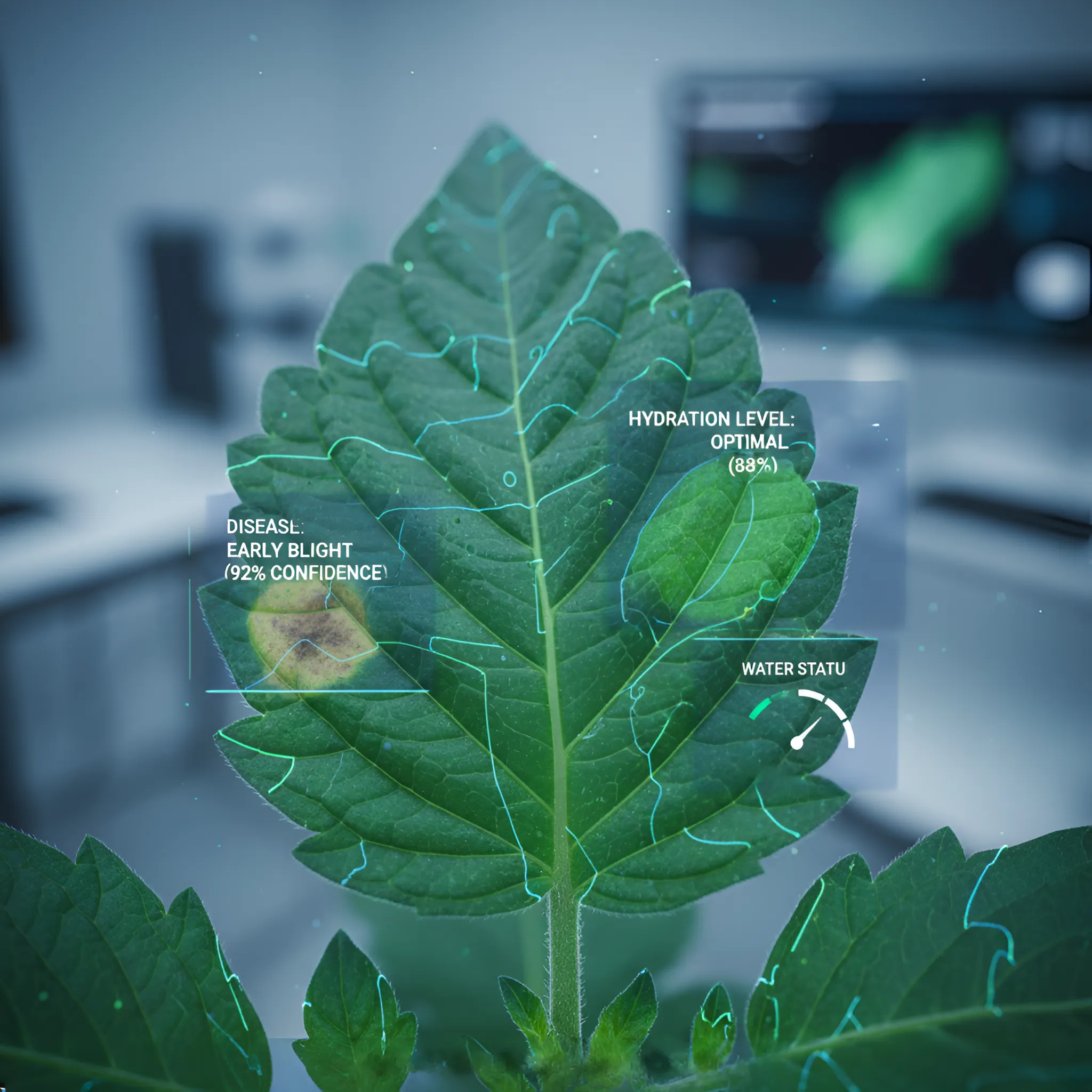
- Disease identification
In 2017, a CNN + K-means based model achieved 92.89% accuracy in weed identification. Studies at Istanbul Technical University also demonstrated that CNN-based models outperform traditional machine learning approaches using handcrafted features.
CNN Architecture Explained
CNNs consist of:
- Convolution layers for feature extraction
- Pooling layers for dimensionality reduction
- Fully connected layers for classification
These architectures are highly effective in image-based agricultural applications when combined with data from drones, IoT devices, and remote sensing platforms.
Despite accuracy levels reaching 95% in some studies, challenges remain in:
- Model robustness
- Data availability
- Real-world deployment
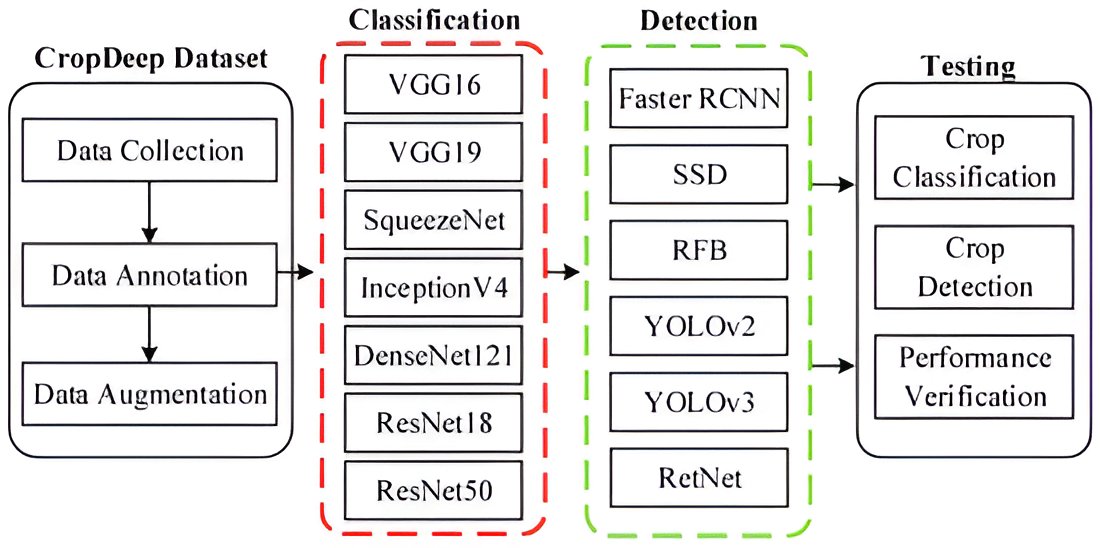
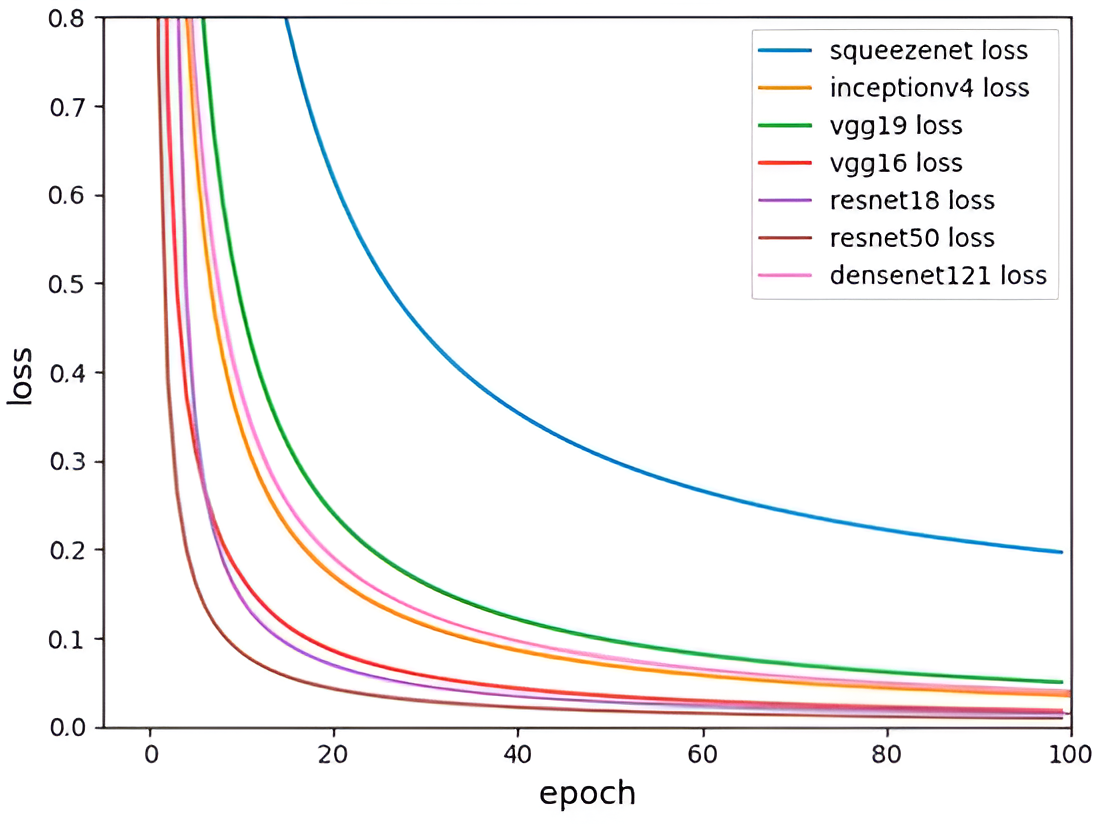
Common Pre-Trained Deep Learning Models Used in Agriculture
- ResNet
- SegNet
- ZFNet
- VGG
- Inception v3
- AlexNet
- Fast R-CNN
- YOLOv3
- EfficientNet
- GoogleNet
- RetinaNet
Conclusion
Artificial Intelligence in agriculture is redefining how food is produced. By enabling precision farming, predictive insights, and automated operations, AI helps farmers achieve higher yields with fewer resources.
Organizations developing AI-driven tools — including drones, automated machinery, and intelligent analytics platforms — will play a vital role in addressing global food security challenges.
With over 272 deep learning startups impacting agriculture, the future of farming is intelligent, data-driven, and sustainable.
At AI India Innovations, we are committed to building AI solutions that empower agriculture through innovation, efficiency, and responsible technology adoption.