
AI-Powered Voice-Based Medicine / Drug Ordering
Introduction
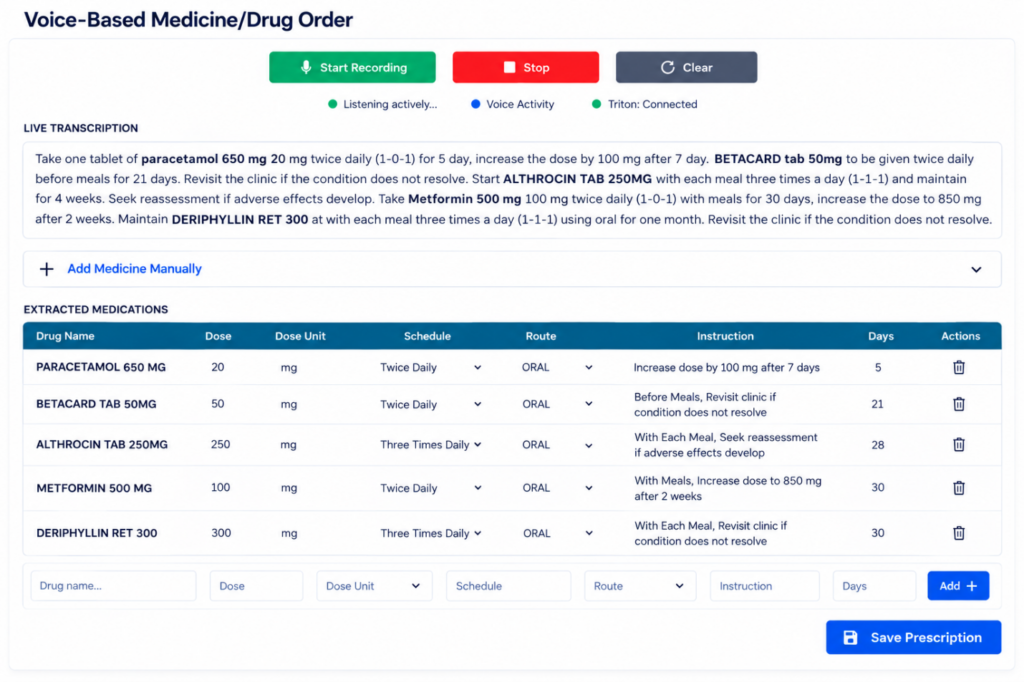
Doctors spend a significant amount of time every day writing prescriptions and completing administrative paperwork. In busy hospitals and clinics, this manual documentation process often reduces the time available for direct patient care. Manual prescription writing can also result in errors, inconsistencies, and repetitive work, while hospitals still require accurate and well-organised medical records for effective patient management. This raises an important question: can doctors save valuable time by simply speaking instead of typing or writing? A voice-based prescription solution offers a practical answer by allowing doctors to generate prescriptions quickly and efficiently through speech. The goal is simple—reduce paperwork for doctors, maintain organised records for hospitals, and allow healthcare professionals to spend more time focusing on their patients.
How ASR Works
A Voice-based medicine/drug order application for this need. It is useful across:
- Hospitals: Doctors can create prescriptions while examining patients, reducing the need for manual note-taking and paperwork. This helps hospitals improve consultation efficiency and manage higher patient volumes during busy hours. Digital prescriptions are automatically organised and stored, making it easier for hospital staff to access records whenever needed. This improves coordination between doctors, pharmacies and administrative teams.
- Clinics: Small and medium-sized clinics can maintain professional digital prescription records without investing in additional data-entry resources. This helps improve operational efficiency while keeping costs under control. The system helps doctors spend less time on documentation and more time interacting with patients, creating a better consultation experience and improving overall patient satisfaction.
- Telemedicine: During online consultations, doctors can simply speak the prescription while the system automatically converts it into a structured format. This reduces delays and allows patients to receive prescriptions quickly. Digital prescriptions can be reviewed, saved and shared instantly, helping healthcare providers deliver a smooth and efficient remote consultation experience.
- Electronic health records: Structured prescription data can be integrated directly into patient records, reducing duplicate work and ensuring that information remains consistent across healthcare systems. Doctors and hospital administrators can quickly search historical prescriptions, review treatment patterns and access patient medication history whenever required.
- Clinical documentation: Beyond prescriptions, the same voice-based approach can support clinical notes, consultation summaries and routine documentation tasks, helping healthcare professionals reduce administrative burden. Standardised documentation improves record quality and ensures that important patient information is captured in a consistent and organised manner.
How an Voice-Based Medicine/Drug Order Helps Doctors and Hospitals
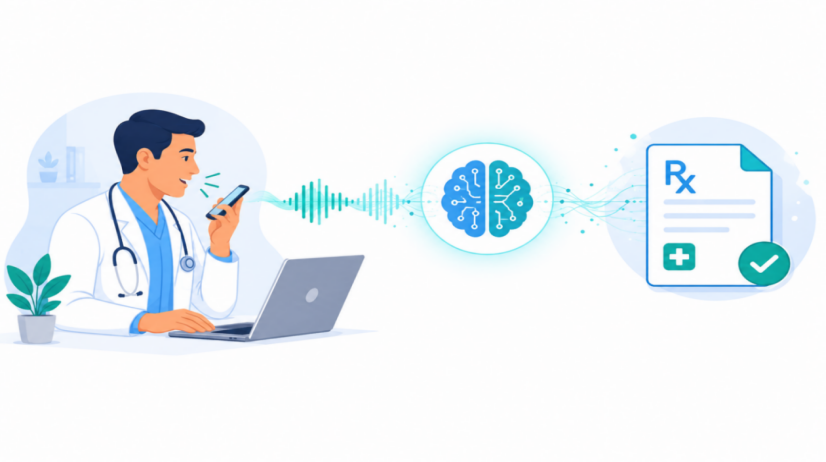
Every minute a doctor spends typing is a minute not spent with a patient. An Voice-based medicine/Drug order gives that time back and helps hospitals keep cleaner, more organised records. Here is the practical value:
- Saves doctors’ time: Speaking a prescription is faster than writing or typing it, especially across a full day of patients.
- Cuts repetitive work: Less typing, less paperwork and fewer repeated entries.
- More time for patients: Doctors can focus on the consultation instead of the screen.
- Clearer prescriptions: Medicine names, dosage and instructions appear in a standard, readable format, which helps patients and pharmacies.
- Fewer corrections: Medicines are checked against a trusted list, so small spelling errors are caught early.
- Organised records: Every prescription follows one format, making records easy to search, review and audit.
- Less manual data entry: Staff need not re-type prescriptions into the system.
- Fits existing workflows: The prescription goes into the hospital’s current records system, so there is no need to replace what already works.
- Efficiency at scale: Many doctors can use it together, across departments or branches.
- Value for management: Better use of doctors’ time, consistent records and a smoother patient flow.
In short, doctors get relief from paperwork, and hospital management gets a consistent, dependable process. This is why hospitals, clinics and healthcare organisations across India can see it as a practical step towards modern prescription handling.
Voice-Based Solution Comparison: Our Application vs Savram AI, Deepgram and Whisper
| Comparison Point | AI-Powered Voice-Based Medicine / Drug Ordering | Sarvam AI | Deepgram | Whisper |
|---|---|---|---|---|
| General speech-to-text | ✔ | ✔ | ✔ | ✔ |
| Understands Indian English and Indian voices in general speech | ✔ | ✔ | ✔ | ✔ |
| Can be customised by developers for healthcare use | ✔ | ✔ | ✔ | ✔ |
| Ready to handle many users at the same time | ✔ | ✔ | ✔ | ✘ |
| Medicine-name recognition built for prescriptions | ✔ | ✘ | ✘ | ✘ |
| Trained on real prescription phrases | ✔ | ✘ | ✘ | ✘ |
| Tuned for Indian prescription speech | ✔ | ✘ | ✘ | ✘ |
| Understands dosage, frequency, duration and instructions | ✔ | ✘ | ✘ | ✘ |
| Converts speech into structured medicine entries | ✔ | ✘ | ✘ | ✘ |
| Checks medicines against a trusted medicine list | ✔ | ✘ | ✘ | ✘ |
| Auto-corrects small spelling differences in medicine names | ✔ | ✘ | ✘ | ✘ |
| Gives a ready-to-review prescription | ✔ | ✘ | ✘ | ✘ |
| Reduces manual correction by doctors | ✔ | ✘ | ✘ | ✘ |
| Easy for doctors: speak naturally, review and save | ✔ | ✘ | ✘ | ✘ |
| Built around the hospital prescription workflow | ✔ | ✘ | ✘ | ✘ |
| Sends prescription directly to existing hospital records | ✔ | ✘ | ✘ | ✘ |
| Removes extra manual data entry | ✔ | ✘ | ✘ | ✘ |
| Ready to use for hospitals without extra development | ✔ | ✘ | ✘ | ✘ |
| Overall suitability for voice-based medicine ordering | ✔ | ✘ | ✘ | ✘ |
| General speech-to-text | ✔ |
| Indian English and Indian voices | ✔ |
| Healthcare customisation | ✔ |
| Multiple users | ✔ |
| Medicine-name recognition | ✔ |
| Prescription phrases | ✔ |
| Indian prescription speech | ✔ |
| Dosage, frequency and duration | ✔ |
| Structured medicine entries | ✔ |
| Medicine-list checking | ✔ |
| Medicine-name correction | ✔ |
| Ready-to-review prescription | ✔ |
| Reduces manual correction | ✔ |
| Speak, review and save | ✔ |
| Hospital prescription workflow | ✔ |
| Hospital record integration | ✔ |
| Reduces manual data entry | ✔ |
| Ready without extra development | ✔ |
| General speech-to-text | ✔ |
| Indian English and Indian voices | ✔ |
| Healthcare customisation | ✔ |
| Multiple users | ✔ |
| Medicine-name recognition | ✘ |
| Prescription phrases | ✘ |
| Indian prescription speech | ✘ |
| Dosage, frequency and duration | ✘ |
| Structured medicine entries | ✘ |
| Medicine-list checking | ✘ |
| Medicine-name correction | ✘ |
| Ready-to-review prescription | ✘ |
| Reduces manual correction | ✘ |
| Speak, review and save | ✘ |
| Hospital prescription workflow | ✘ |
| Hospital record integration | ✘ |
| Reduces manual data entry | ✘ |
| Ready without extra development | ✘ |
| General speech-to-text | ✔ |
| Indian English and Indian voices | ✔ |
| Healthcare customisation | ✔ |
| Multiple users | ✔ |
| Medicine-name recognition | ✘ |
| Prescription phrases | ✘ |
| Indian prescription speech | ✘ |
| Dosage, frequency and duration | ✘ |
| Structured medicine entries | ✘ |
| Medicine-list checking | ✘ |
| Medicine-name correction | ✘ |
| Ready-to-review prescription | ✘ |
| Reduces manual correction | ✘ |
| Speak, review and save | ✘ |
| Hospital prescription workflow | ✘ |
| Hospital record integration | ✘ |
| Reduces manual data entry | ✘ |
| Ready without extra development | ✘ |
| General speech-to-text | ✔ |
| Indian English and Indian voices | ✔ |
| Healthcare customisation | ✔ |
| Multiple users | ✘ |
| Medicine-name recognition | ✘ |
| Prescription phrases | ✘ |
| Indian prescription speech | ✘ |
| Dosage, frequency and duration | ✘ |
| Structured medicine entries | ✘ |
| Medicine-list checking | ✘ |
| Medicine-name correction | ✘ |
| Ready-to-review prescription | ✘ |
| Reduces manual correction | ✘ |
| Speak, review and save | ✘ |
| Hospital prescription workflow | ✘ |
| Hospital record integration | ✘ |
| Reduces manual data entry | ✘ |
| Ready without extra development | ✘ |
In a busy outpatient department, a doctor does not want to correct a paragraph of text. With our application, the doctor speaks, reviews and saves, and the record is ready.
General speech-to-text is not the same as a healthcare medicine-order solution. AI India Innovations offers a solution designed around the real workflow of doctors, medicines, prescriptions and hospital records.
Frequently Asked Questions
An AI-powered voice-based medicine ordering system allows doctors to use speech to create structured prescription information instead of entering every prescription detail manually.
The three major ASR architectures are encoder-decoder models, transducer models, and speech-language models. Encoder-decoder models process audio before generating text, transducers can generate text while audio is still being processed, and speech-language models connect a speech encoder with a large language model.
It can reduce repetitive typing and manual prescription entry, allowing doctors to spend less time on documentation and more time on patient consultations.
Yes. The blog describes applications across hospitals and small and medium-sized clinics, where doctors can create and maintain digital prescription records through voice-based input. AI Based Voice-Based Input
Yes. During online consultations, doctors can speak prescription information, which can be converted into a structured format for review, saving and sharing.