AI Doctor-Patient Conversation Summary:
How It Simplifies Clinical Documentation
Introduction
A good consultation is not only about diagnosis and treatment. It is also about making sure the patient understands what was discussed. In busy clinics, doctors often have to divide their attention between the patient and documentation. Our Doctor-to-Patient Summary application helps solve this problem by listening to the consultation and preparing a clear, organised summary. The doctor can start the visit, speak naturally, and review the summary before saving it. This creates a simpler experience for the doctor and a clearer record for the patient.
Our Application Features
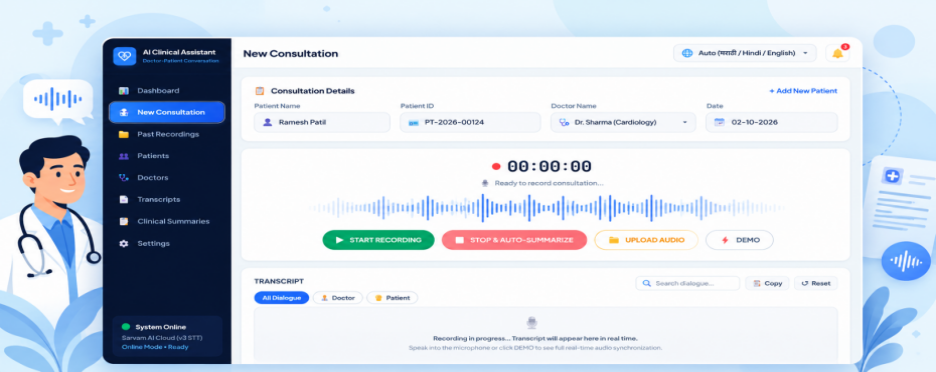
Our application is designed around the way consultations actually happen in India. Doctors and patients may speak in English, Hindi, Marathi, or mix these languages during the same conversation. The application is designed to handle this natural style of communication. It also identifies who is speaking, so the doctor can easily see the difference between the doctor's discussion, the patient's concerns, and other people speaking in the room.
The application focuses on what matters. Important points such as symptoms, history, medicines, diagnosis and advice are captured, while unnecessary small talk is left out. The final summary is written in clear English, making it easier for doctors, staff and patients to understand and refer to later. The doctor can review and edit the summary before saving it, so the technology supports the doctor rather than replacing the doctor's judgement.
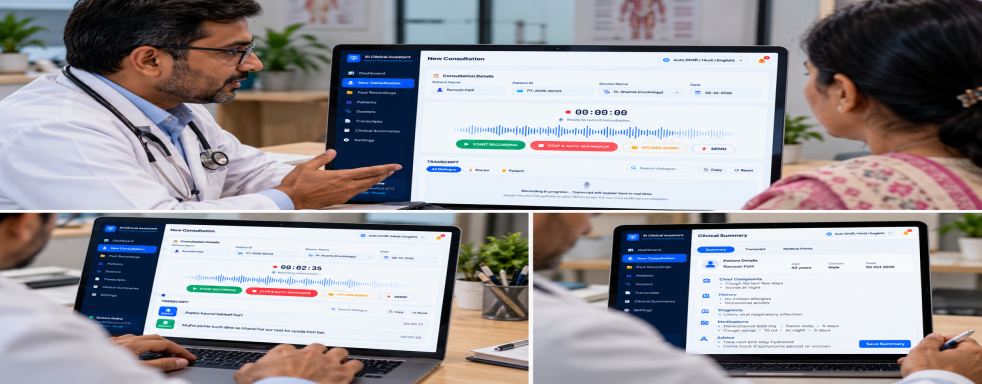
For hospitals and clinics, the value goes beyond saving writing time. Better summaries can create more consistent records, reduce repeated questions, make follow-up visits easier and help doctors stay focused on the patient. A smoother consultation can also reduce waiting pressure and support a more professional patient experience. The supplied product brief also describes past recordings and summaries as easy to find and patient information as remaining protected within the hospital premises.
- Saves doctors’ time. Doctors no longer write notes after every visit. Think of a doctor who sees 30 patients a day and spends five minutes on notes after each one. That is more than two hours of paperwork daily, and our application takes most of it away.
- Reduces documentation workload. Less writing, typing and correcting means less extra staff time for notes, and a calmer clinic.
- Helps doctors focus on patients. When the doctor looks at the patient instead of a notebook or screen, the patient feels heard and cared for.
- Works the way India speaks. It supports English, Hindi, Marathi, and a mix of all three in one sentence. It also understands when a relative or nurse joins the talk.
- Identifies what matters. Symptoms, history, medicines, diagnosis and advice are picked out of the conversation. Small talk is left out.
- Creates clear, organised summaries. Every line is marked as spoken by the doctor, the patient or another person. The final summary is always in clear English that every doctor and staff member can read.
- Keeps the doctor in control. The doctor reviews every summary, changes it if needed, and saves it. It is a help for the doctor, never a replacement.
- Fits every department. The summary follows the note format your department already uses, whether general medicine, children’s care or bones and joints. No change in routine is needed.
- Improves patient experience. Patients get more attention and shorter waiting times. Happy patients come back and bring their family and friends.
- Supports clinic efficiency and growth. With less paperwork, the same doctor can attend to more patients without feeling rushed. Neat, consistent records also build your clinic’s reputation.
- Keeps patient information protected. Conversations and records stay within your hospital premises and never go outside.
Comparison: Our Application vs Leading AI Tools
Several leading healthcare AI platforms, including Abridge, Nabla and Microsoft Dragon Copilot, can create clinical documentation and patient-facing summaries. Abridge provides Patient Visit Summaries in patient-friendly language; Nabla can generate post-visit patient instructions; and Dragon Copilot can create patient-facing instructions and other supporting documents. These tools show that AI-assisted consultation summaries are becoming an important part of modern healthcare.
| Business requirement | Our application | Abridge | Nabla | Dragon Copilot |
|---|---|---|---|---|
| Doctor-patient conversation summary | ✓ Available | ✓ Available | ✓ Available | ✓ Available |
| Patient-friendly summary / instructions | ✓ Available | ✓ Available | ✓ Available | ✓ Available |
| Clear English output | ✓ Available | ✓ Available | ✓ Available | ✓ Available |
| English + Hindi + Marathi in one natural conversation | ✓ Available | × Not available | × Not available | × Not available |
| Speaker identification | ✓ Available | ✓ Available | ✓ Available | × Not available |
| Focused medical summary + doctor review | ✓ Available | ✓ Available | ✓ Available | ✓ Available |
| Designed for Indian multilingual needs | ✓ Available | × Not available | × Not available | × Not available |
| Patient information designed to stay within hospital premises | ✓ Available | × Not available | × Not available | × Not available |
Where our application stands out
- Languages: Two of the four tools do not list Marathi among their supported languages. Our application is built for English, Hindi and Marathi, even when mixed in one sentence.
- Privacy: The four tools are delivered through the cloud, and we found no option to keep data inside the hospital. Ours keeps patient conversations and records within your hospital premises.
- Doctor control and note format: Like the leading tools, ours lets the doctor review and edit every summary and follows your department’s existing format.
Frequently Asked Questions
An AI doctor-patient conversation summary converts a consultation into a structured summary of the relevant information discussed between the doctor and patient. It can help organise symptoms, medical history, medicines, diagnoses discussed and treatment advice into a clearer clinical record.
Yes, AI-powered clinical documentation systems can be designed to process multilingual consultations. For the AI India application, the focus is on conversations involving English, Hindi and Marathi, including situations where speakers naturally switch between these languages during the same consultation.
Yes. The doctor should review the generated summary before it becomes the final clinical record. AI-assisted documentation is intended to support the clinician rather than replace clinical judgement. Current clinical documentation workflows from major platforms also provide mechanisms for clinicians to review and edit AI-generated notes before finalisation.
No. The application is designed to assist with documentation, not replace the doctor's clinical decision-making. The generated summary represents information captured from the consultation and should be reviewed and approved by the healthcare professional before it is used as the final record.
Consent requirements depend on the applicable laws, regulations and healthcare organisation's policies. Because an ambient documentation system may record a patient consultation, hospitals and clinics should establish an appropriate consent process before using it. Research into ambient clinical documentation has identified informed consent as an important part of responsible implementation