Beyond Visual Inspection: Innovative Applications of AI-Powered Paint Defect Detection
A painted surface protects the product underneath and is the first thing a customer notices. This article explores how AI-powered defect detection can move quality control beyond pass or fail, and what manufacturers can build on top of it.
Introduction: a finish is the first thing a customer judges
A painted surface does two jobs at once. It protects the product underneath from corrosion, moisture and wear, and it is the first thing a customer notices. A car door with a faint run in the clear coat, a refrigerator panel with an uneven texture, a pipeline with a bubbled coating: each of these is a quality escape, and each one is expensive. It means rework, scrap, warranty claims or, in protective-coating applications, a failure that appears months later.
For decades, the last line of defence has been a trained human inspector under bright lights. That works, up to a point. But as production speeds rise and quality expectations tighten, many manufacturers are asking a bigger question: what if the inspection station could not only find defects, but also help explain where they come from?
That is the promise of AI-powered paint defect detection, and it goes well beyond replacing a pair of eyes.
Why traditional paint inspection struggles
Manual inspection is a skilled job, but it has structural limits that no amount of training removes:
- Fatigue and attention drift. Spotting a faint defect on the thousandth panel of a shift is very different from spotting it on the first.
- Two inspectors may disagree on whether a mark is acceptable. Standards live partly in people’s heads.
- Lighting and angle sensitivity. Many paint defects only show under the right light at the right angle.
- No data trail. A human decision is usually “pass” or “fail”. The defect type, location and frequency rarely get recorded in a form anyone can analyse.
That last point matters most. A plant that inspects everything but records almost nothing is collecting the verdicts and throwing away the evidence.
How AI-powered inspection works
Modern paint inspection systems use object detection, a branch of computer vision. A camera captures an image of the painted surface, and a trained neural network looks for visual patterns that match known defect types, drawing a box around each one and labelling it with a class and a confidence score.
The model learns from hundreds or thousands of labelled example images. In our own project, we trained a YOLO26s detector to recognise seven common paint defect categories, then ran it on an NVIDIA Jetson Orin Nano, a compact edge computer small enough to sit next to a production line. (The full build is the subject of our companion case study.)

Figure 1. A proposed inspection workflow, from camera capture to accept or review decisions.
The seven defects a camera can learn to see
Each defect tells a different story about the process that produced it. The interpretations below are general coating-industry knowledge, and any plant should confirm root causes with its own process engineers.
- Oil marks: often linked to surface contamination before painting.
- Orange peel: a bumpy, citrus-like texture, usually related to application or flow conditions.
- Paint sagging: drips or curtains where too much material has been applied or has not set properly.
- Peel off: coating that has lost adhesion and lifted from the surface.
- Scratches: mechanical damage from handling, transport or contact.
- Water marks: spots or streaks left by moisture during or after finishing.
- Bubbling: trapped air or solvent that raises blisters in the film.
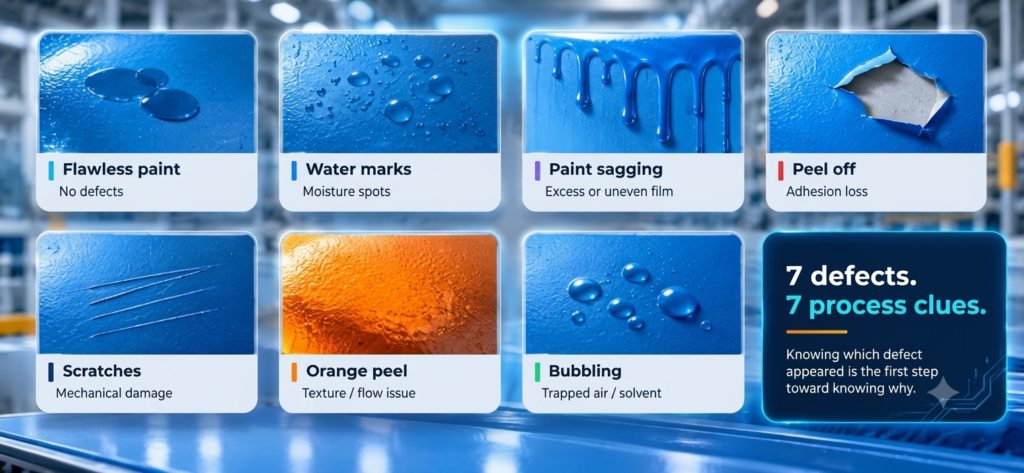
Figure 2. The seven defect categories and the process clue each one can provide (stylised illustrations).
Ten innovative applications, from inspection to intelligence
It helps to think of the applications as a maturity ladder with three rungs: inspect, automate and learn.
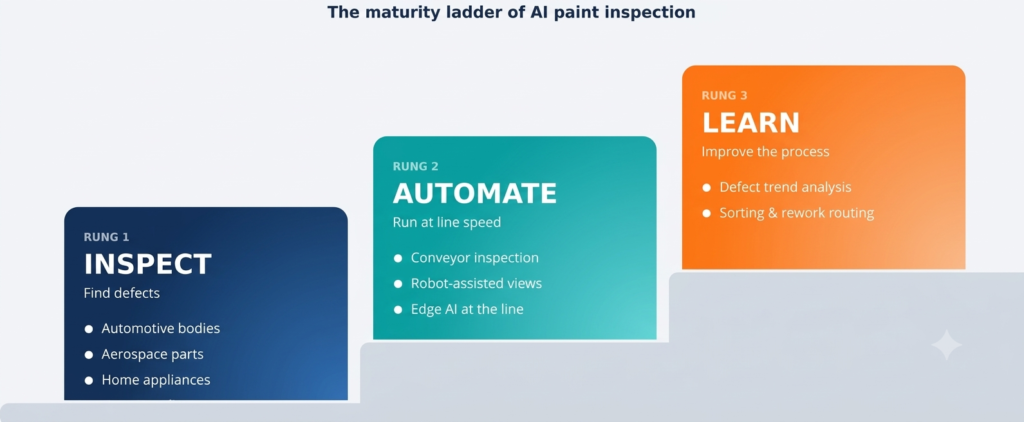
Figure 3. The maturity ladder of AI paint inspection
Inspect
- Automotive body inspection. Cameras can check doors, bonnets, fenders and roof panels for scratches, sagging, bubbling and texture problems before a vehicle leaves the paint shop or the plant. The goal is not to remove human judgement but to make sure nothing reaches the human uninspected.
- Aerospace and aviation components. Coatings on aircraft parts must be consistent, and visible irregularities need to be caught early. Camera-based screening can flag surface anomalies for a specialist to review in detail.
- Home appliances. Refrigerators, washing machines and ovens have large, smooth, painted metal surfaces where even small blemishes are noticeable. Inspection just before packaging helps prevent damaged-looking products from reaching customers.
- Furniture and wood coatings. Cabinets, panels and furniture combine paint or lacquer with natural material variation. Detecting peeling, scratches and uneven finishes helps keep premium products consistently premium.
- Industrial equipment and pipeline coatings. Protective coatings on machinery, steel structures and pipelines exist to prevent corrosion. Visible coating defects such as peeling or bubbling can be screened by camera, including in places that are slow or awkward for people to inspect repeatedly.
Automate
- Continuous conveyor inspection. Cameras mounted along a conveyor can inspect every product as it passes, rather than a sample. The system works the same way on the last unit of a shift as the first.
- Robot-assisted inspection. Mount a camera on a robotic arm and the same detection model can examine multiple sides of a product and hard-to-reach surfaces, repeating the same path every time.
- Edge AI at the line. Running detection directly on an edge device, such as a Jetson-class computer, keeps decisions local. That means low latency at line speed, no dependence on a stable internet connection, and production images that never have to leave the factory.
Learn
- Defect trend analysis. Once every detection is logged with its defect type, location and time, patterns emerge. Is sagging clustering on one shift? Do water marks rise on humid days? Are scratches concentrated at one handling point? The inspection station becomes a sensor for the whole process.
- Automated sorting and rework routing. Detection results can be connected to a line controller so that flagged products are diverted to rework or a human review station automatically, while clean products continue downstream.
A note on honesty. Rungs two and three describe where the technology can go. Our own trained model performs the first job, detecting and classifying seven visible defect types. Severity scoring, heatmaps, batch tracking, dashboards and controller integration are extensions a plant would need to build around the detector.
A scenario: the paint shop of the near future
Picture a vehicle leaving the final coating booth. It passes through an inspection tunnel where cameras capture each panel under controlled lighting. An edge computer runs the detector on every frame in real time. A small scratch on a rear door is flagged and its position is logged. The vehicle is routed to a review bay where an inspector goes directly to the marked area, confirms the defect and approves a touch-up.
Overnight, the quality team opens a dashboard. Sagging on the left side panels has crept up since a materials change two days ago. They investigate the application stage instead of waiting for customer complaints to reveal it.
Nothing in this picture removes people. It gives them better information, sooner.
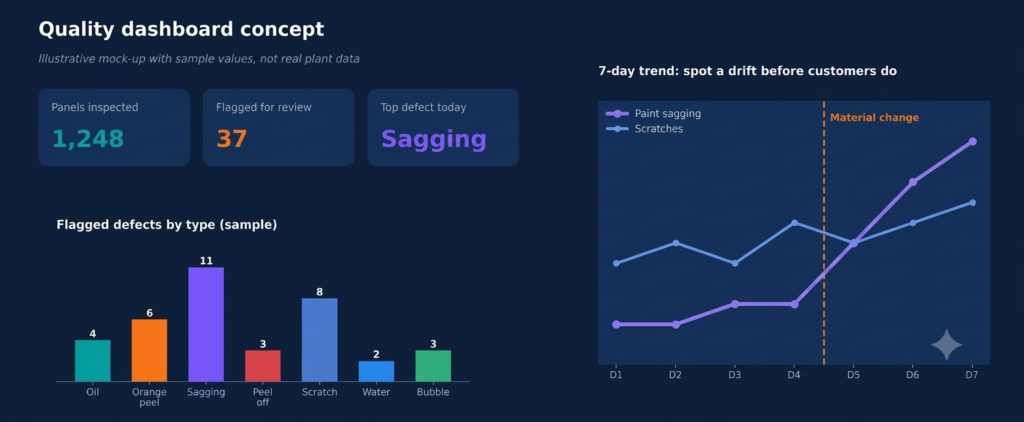
Figure 4. A dashboard concept: defect counts by type and a trend that reveals a process drift (sample values for illustration only).
Before AI vs. after AI
| Traditional Inspection | AI-Assisted Inspection |
|---|---|
|
|
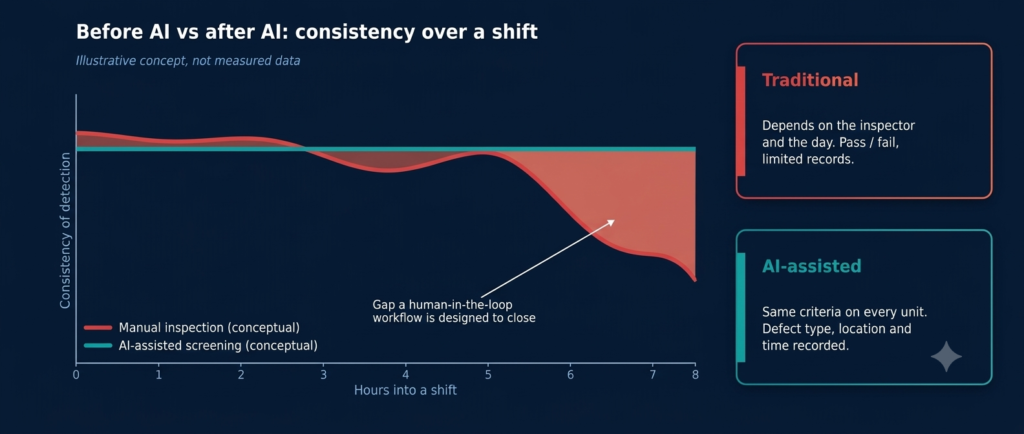
Figure 5. A conceptual view of detection consistency over a shift. Illustrative only, not measured data.
Human-in-the-loop: the realistic path
The most practical deployments today keep humans in the decision loop. The model handles the repetitive screening and flags uncertain cases for a person to judge. This approach respects an important reality: no vision model is perfect, and in our own validation, some texture-like defects such as orange peel and fine scratches were noticeably harder to detect than distinct defects such as oil marks or peeling. Plants that treat AI as a tireless first-pass assistant, not an infallible judge, tend to get the most value.
Business impact, without the hype
It is tempting to promise dramatic percentage savings, but results depend heavily on the product, the line and the quality of the system. What can be said credibly is where the value comes from:
- Less rework and scrap, from catching defects earlier
- More consistent quality, because the same criteria apply to every unit
- Faster feedback, because inspection data reaches engineers in hours, not weeks
- Traceability, through digital inspection records that support audits and customer queries
How a plant can start small
You do not need to transform an entire factory at once.
- Pick one station and one or two defect types that cause the most pain.
- Control the camera setup: fixed mounting, consistent lighting, a stable distance.
- Collect images from your own line, not just public examples.
- Run the model in shadow mode alongside human inspectors and compare results.
- Only then move toward alerts, sorting and process feedback.
Lighting and camera positioning often matter as much as the model itself.
The road ahead
The direction of travel is clear: inspection that is continuous, connected and self-improving. Detection models will be paired with severity assessment, so a hairline scratch and a deep gouge are treated differently. Multi-camera setups will cover whole products at once. Defect data will feed back into process settings, moving quality control from catching problems to preventing them. Edge devices will make all of this practical on the factory floor.
Conclusion
AI-powered paint defect detection is often described as a replacement for manual inspection. The more interesting story is what happens when inspection becomes data. A camera that finds a scratch is useful. A system that shows where scratches come from, how often they appear and what changed when they started is transformative.
For manufacturers, the path from visual inspection to intelligent surface inspection does not begin with a factory-wide overhaul. It begins with one camera, one station and one question: what is our paint finish trying to tell us?
Frequently Asked Questions
AI-powered paint defect detection automates the identification of surface imperfections, helping manufacturers maintain consistent product quality. It reduces dependence on repetitive manual inspection, identifies defects early, and provides digital records that can support quality analysis and corrective actions.
Yes. AI-based inspection systems can be introduced at selected inspection stations using industrial cameras and edge computing devices. Manufacturers can initially run the system alongside existing manual inspection processes and gradually extend it toward automated inspection and sorting.
Detection performance depends on camera positioning, lighting consistency, surface reflections, image quality, and the diversity of training data. Controlled lighting and images collected from actual production environments help improve reliability. The model should also be validated under the operating conditions of the manufacturing facility.
Yes. Recording defect categories, locations, and timestamps helps manufacturers identify recurring patterns. For example, an increase in paint sagging during a particular shift or scratches concentrated around a handling station can provide useful clues for process investigation. Combining inspection data with production information can support root-cause analysis.
A typical system requires an industrial or high-quality camera, suitable lighting, an edge computing device such as NVIDIA Jetson, and a trained computer vision model. Depending on production requirements, additional components such as conveyor integration, monitoring dashboards, and automated sorting mechanisms can also be incorporated.
About the Company
Company Name: AI India Innovations
Connect With Us
Interested in implementing AI-powered visual inspection solutions for your manufacturing process?
Email: connect@aiindia.ai